SkinSeoul: Shop K-Beauty
- 0.0
- Rating
- 10.00K
- Installs
- Free
- Price

 Analysis by App-foxy
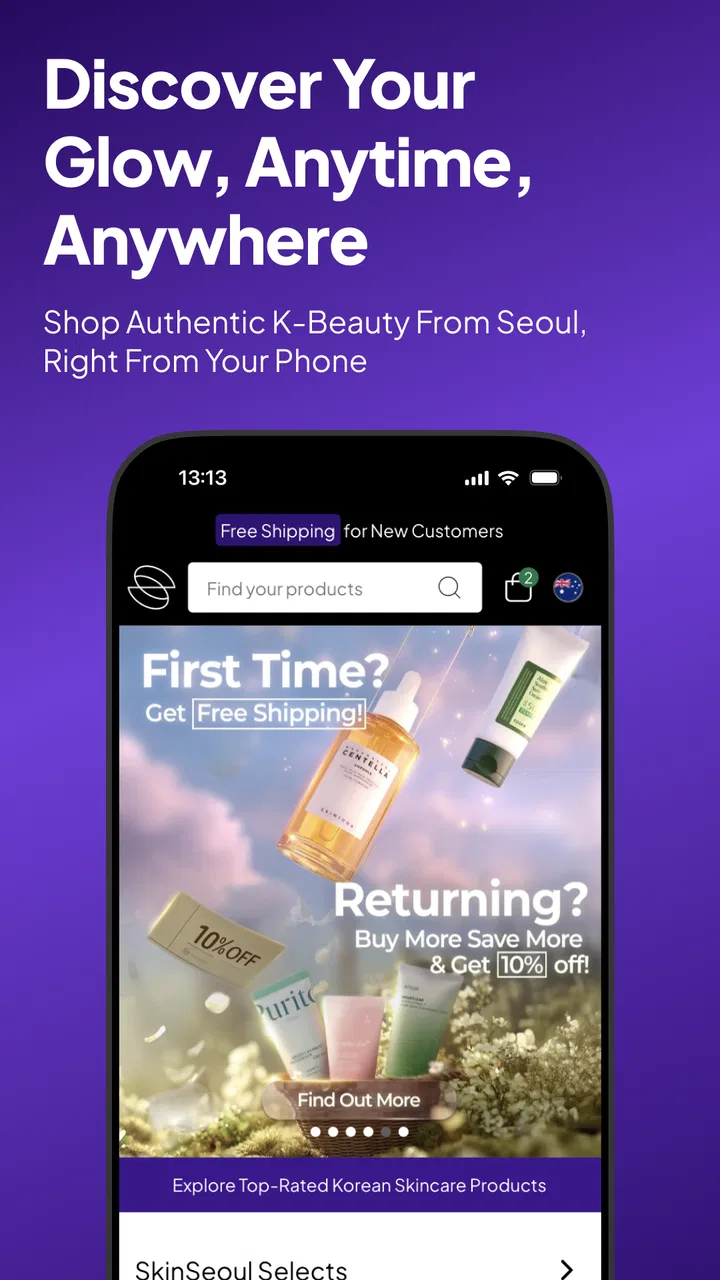
I approached SkinSeoul: Shop K-Beauty as a beauty shopping app rather than as a general skincare encyclopedia. That distinction matters. Its focus is clear: it comes from SkinSeoul, sits in the beauty category, and presents itself as a destination for Korean beauty products. I found the idea appealing because K-beauty can be difficult to navigate when product names, routines, and ingredients are unfamiliar. A dedicated app has the potential to make that process less scattered than jumping between searches, social posts, and several retailer sites.
My overall impression is that this is an app to keep on hand when I already have a skincare goal in mind. It makes more sense for someone exploring Korean skincare than for a person who wants a broad beauty marketplace covering every possible brand and product type. The experience is also easier to judge as an early version of a focused shopping tool than as a fully mature beauty platform. That makes the current release interesting, but it also means I would approach it with practical expectations rather than assuming it replaces every other way of researching and buying skincare.
How SkinSeoul feels in its current state
The strongest part of the concept is its focus. Instead of asking me to sift through a huge general marketplace where Korean products are mixed with unrelated cosmetics, the app is built around the K-beauty shopping journey. That narrower purpose can save time when I am looking for skincare associated with Korean routines, whether I am replacing a familiar item or beginning with a simple cleanser, moisturizer, or treatment search.
You May Also Like

 AccuWeather: Weather Radar
AccuWeather Review: A Quick, Clear Forecast for Everyday Decisions
For everyday plans, the best forecast is the one you can understand quickly. AccuWeather makes rain timing, radar, and local conditions easy to act on, with a few trade-offs.

 Hill Climb Racing
Why Hill Climb Racing Still Turns Crashes Into One More Run
A tiny car, a bumpy hill and one more upgrade: Hill Climb Racing keeps resurfacing because its simple chaos makes every near-miss feel personal.

 AliExpress - Shopping App
AliExpress Makes Global Shopping Feel Personal, but Shoppers Bear the Risk
AliExpress turns a global marketplace into a pocket-sized discovery engine. Its reach is useful, its shopping loop compelling, and its trade-offs easy to miss.

 Lords Mobile: Kingdom Wars
Lords Mobile Is a Kingdom-Building Routine, Not a Quick Match
A case-by-case verdict on the building, battles, device demands, and social commitments that make Lords Mobile rewarding for some players and exhausting for others.

 PDF Scanner app - TapScanner
TapScanner Makes Paperwork Easier to Capture, Check, and Share
TapScanner makes scanning with a phone feel less like a rescue operation and more like a dependable step in getting work done. Its capture tools are useful, though not flawless.

 Block Blast!
 Shows How Much a Puzzle Game Can Leave Out
A quiet grid game shows why puzzle players increasingly value instant clarity, repeatable skill and low-pressure play—and where the genre still needs to catch up.
More From Our News Desk
View All News


That focus is also the first thing a new user should understand. This is not an app I would open expecting a complete consultation from a dermatologist, a personalized diagnosis, or a substitute for professional advice. I see it as a shopping and discovery companion. It can help organize the route from interest to product consideration, but I still need to make sensible decisions about ingredients, allergies, skin sensitivity, and whether a product suits my routine.
For a first-time visitor, I would begin with one specific need instead of browsing without a plan. “I need a gentler cleanser” is more useful than “I want better skin,” because a focused goal gives the app a fair test. It also reduces one of the common problems with K-beauty shopping: collecting attractive products simply because the packaging or online enthusiasm is persuasive.
The app is free, which lowers the barrier to trying it. It is suitable for Everyone, so its presentation is not aimed at an adult-only audience. That does not mean every cosmetic product is appropriate for every person, of course. Younger users and anyone with reactive skin should still read product information carefully and involve a parent, guardian, pharmacist, or clinician when that is sensible.
SkinSeoul has reached over 10 thousand installs, and the developer is SkinSeoul. Those details suggest a real but still relatively early audience rather than the scale of a long-established mass-market platform. I consider that useful context: the app may be worth exploring for its focused purpose, while users who depend on a very deep review history or a highly polished retail ecosystem may prefer to compare it with larger alternatives before making a final purchase.
A practical everyday scenario
Imagine I notice that my usual evening routine leaves my face feeling tight. I do not want to spend an hour watching short videos with conflicting recommendations, and I do not want to buy five products at once. I would open SkinSeoul, use the shopping experience to narrow my search around a gentler routine, and make a short list rather than immediately filling a basket.
The useful discipline here is to treat the app as a filter for choices, not as permission to change everything at once. I would compare the product purpose, inspect the ingredient information available to me, and introduce only one unfamiliar item into my routine. If my skin reacted, I could identify the likely cause more easily than if I had replaced cleanser, toner, serum, and cream on the same day.
That workflow is one of the app’s more practical advantages. A specialist K-beauty destination can reduce the noise around discovery, but the user still needs to supply the judgment. The app can help me find candidates; it cannot know how my skin will behave after application.
What the current release tells me
The current version is 1.0.7, and the app was released on November 14, 2025. I read that as a sign of a product that is still establishing its shape. Version 1.0.7 is not a promise of a particular feature set, and I would not assume that a recent release automatically means every part of the shopping journey has been refined. What it does tell me is that the app has moved beyond a purely initial build and is being presented in an actively current form.
For existing users, a version at this stage can be a mixed experience. Early adopters may appreciate seeing the service develop around a clear K-beauty identity, but they may also encounter areas that feel less complete than those in major shopping apps. I would pay attention to how quickly the app helps me move from discovery to a confident decision, how clearly it explains products, and whether returning to a previous search feels effortless.
I also appreciate that the app’s minimum operating system is Android 8.0. That gives it a reasonably broad technical reach for Android users with older devices, while still leaving the experience dependent on the phone’s own performance, screen size, and available storage. On an older handset, I would judge it less by visual polish and more by whether browsing remains comfortable and reliable.
How I would use it without overbuying
My first tip is to create a small decision rule before browsing: identify the concern, choose one product category, and set a stopping point. K-beauty routines are often described in many steps, but more steps are not automatically better. A focused app can make it easier to discover more products, which is helpful when I need options but risky when I am vulnerable to impulse buying.
My second tip is to separate discovery from commitment. I would save or note interesting products during the first pass, then return later and ask whether each one solves a real problem in my routine. This two-stage approach is especially useful for beginners because it turns the app into a research workspace rather than a stream of tempting purchases.
My third tip is to compare the product’s role with what I already own. If I already have a moisturizer that works, a new one should have a clear reason to replace it. If I am considering an active ingredient, I would avoid adding another strong product at the same time. This is not a feature claim about the app; it is the best way I found to use a focused beauty marketplace responsibly.
Where it differs from ordinary alternatives
The usual alternative is a general online marketplace. Those services can offer broader selection, familiar payment and delivery processes, and a large volume of customer feedback. They are often better when I already know the exact product I want or when I need to compare sellers, delivery options, or unrelated household items in the same order.
Another alternative is a beauty retailer with a strong editorial section. That kind of service may be more useful when I want tutorials, ingredient education, shade matching, or advice across many international brands. A social platform is different again: it is better for seeing how people use products in real routines, but it can be less dependable for separating personal preference from evidence.
SkinSeoul’s appeal is the middle ground between those choices. Its K-beauty emphasis can make discovery feel more coherent than a general marketplace, while its shopping purpose is more direct than social browsing. The trade-off is that a narrower destination may not provide the breadth, independent comparison tools, or mature community signals I expect from larger alternatives. I would use it when the Korean beauty focus is the reason I am shopping, not when I need the widest possible retail comparison.
What existing users should notice about the update path
For someone already using an earlier build, the most important question is not simply whether the version number changed. I would look for improvements in the parts of the journey that affect trust: finding a relevant product, understanding what it is meant to do, reviewing the information before purchase, and returning to something I considered earlier.
Those details matter more than cosmetic changes because shopping apps succeed or fail on friction. If browsing is smooth but product information is difficult to interpret, I still feel uncertain. If the catalog is appealing but the route back to a product is awkward, I may abandon the search. The current release should therefore be judged by the complete decision process rather than by the presence of a new visual element.
I would also avoid assuming that a later version automatically changes the app’s basic identity. SkinSeoul remains a focused K-beauty shopping app from SkinSeoul, not a general skin-health service. That continuity is positive for users who chose it for its niche, but it may disappoint anyone hoping it will become a universal beauty assistant.
Remaining gaps and realistic limitations
The biggest limitation for me is the natural boundary between shopping guidance and personal skincare advice. Product discovery can be enjoyable, but it is easy to mistake a well-organized catalog for individualized expertise. I would not use the app to diagnose a rash, determine the cause of persistent acne, or decide whether a medical treatment is appropriate.
There is also a learning curve for people who are new to Korean skincare. A specialist catalog may expose me to unfamiliar product categories and ingredients, but that does not automatically explain how they fit together. Beginners should resist copying a complicated routine from a recommendation or influencer. Starting with a basic cleanser, moisturizer, and daytime sun protection is often easier to evaluate than adopting a long sequence immediately.
Another trade-off is comparison depth. A focused destination can make relevant products easier to find, but I may still want to check information elsewhere before ordering. I would compare ingredient lists, look for consistent product details, consider the seller and delivery context, and check whether the item is appropriate for my own sensitivities. That extra step is not a criticism unique to this app; it is a sensible habit for any cosmetics marketplace.
Users who want extensive community reviews may prefer a larger retailer or a dedicated beauty forum. Users who want a diagnostic questionnaire may prefer a service designed around consultations. Users who want makeup shade matching may also find a broader cosmetics app more suitable. SkinSeoul is the wrong choice when the main task is not K-beauty discovery and shopping.
Who will get the most from it
I think the app is best for curious shoppers who want a more concentrated route into Korean beauty. It can suit someone replacing a product, building a modest routine, or exploring a category without navigating a general store filled with unrelated goods. The free price makes experimentation easier, particularly for users who want to inspect the experience before deciding whether it belongs in their regular shopping habits.
It is also useful for a person who already knows enough to ask sensible questions. If I understand my skin’s general behavior, know which ingredients I avoid, and am willing to read before buying, a focused catalog can save time. I can use the app for discovery while keeping control over the final choice.
I would be more cautious recommending it to someone who expects the app to make every decision. It is not the right fit for a user who wants a guaranteed routine, instant results, or a replacement for professional medical guidance. It may also be less convenient for shoppers who routinely combine Korean products with a wide range of other beauty, personal-care, and household purchases in one place.
What I would watch as the product develops
Because this is a relatively new app, I would watch how it handles the fundamentals over time. The most meaningful progress would be clearer product education, easier comparison between similar items, and a smoother way to return to products I have already considered. Those improvements would help users make calmer decisions instead of simply encouraging more browsing.
I would also look for signs that the app respects different levels of experience. Beginners need plain explanations and a gentle path into routines, while experienced shoppers need efficient filtering and enough detail to distinguish similar products. Serving both groups without making the interface crowded would be a worthwhile test of the app’s evolution.
Reliability will matter just as much as catalog appeal. I would want browsing, product pages, and the route toward purchase to feel dependable on both newer and older Android devices supported by the app. A beauty marketplace can have an attractive concept, but small interruptions become frustrating when I am comparing several products or trying to make a careful decision.
Finally, I would watch whether the service maintains its focused identity. Expansion can be valuable, but adding too many unrelated categories could weaken the reason to choose it over a general marketplace. In my view, the best future for SkinSeoul is not to become everything; it is to become especially clear and useful for people shopping Korean beauty.
My recommendation
I recommend trying SkinSeoul if your main interest is discovering and shopping for K-beauty in a dedicated environment. The free entry point, Everyone age rating, Android 8.0 support, and focused purpose make it approachable for a broad range of curious users. I would begin with a specific skincare need, browse deliberately, and treat every product as something to evaluate rather than something I automatically need.
My recommendation is more qualified if you need medical guidance, deep community research, broad cosmetics coverage, or the most mature comparison tools available. In those situations, I would pair the app with a trusted retailer, ingredient reference, or professional opinion rather than relying on it alone.
In the end, I see SkinSeoul as a promising specialist shopping companion in its current 1.0.7 release. Its value comes from narrowing the search around Korean beauty, not from promising to solve every skincare question. The smartest way to use it is as a focused discovery tool, while keeping the final skincare decision in your own hands.
FAQs for SkinSeoul: Shop K-Beauty
01What is SkinSeoul: Shop K-Beauty?
SkinSeoul: Shop K-Beauty is a shopping app focused on Korean beauty products, including skincare, makeup, haircare, and beauty accessories. It is designed to help users browse K-beauty brands, discover routines, compare product details, and place orders from a mobile device. The catalog may include cleansers, toners, serums, sunscreens, masks, and other popular Korean cosmetics.
02Can I trust the products sold through SkinSeoul?
Before purchasing, users should review each product page carefully, including the listed ingredients, size, expiration or manufacturing information, brand details, and customer feedback when available. Korean beauty products can be authentic and effective, but suitability depends on your skin type and sensitivities. If you have allergies or a medical skin condition, checking the ingredient list and consulting a professional is recommended.
03Does SkinSeoul ship Korean beauty products internationally?
Shipping availability, delivery times, fees, and destination restrictions can vary depending on the country, product, and current store policies. During checkout, SkinSeoul should display the available shipping methods and estimated costs before payment is completed. International buyers should also consider customs duties, import taxes, address requirements, and possible delays, since these charges or procedures may not be included in the product price.
04Is the SkinSeoul app free to download and use?
The app itself may be free to download, while purchases are paid separately through the available checkout process. The final amount can include product prices, shipping, taxes, currency-conversion charges, or import fees, depending on your location and payment method. It is worth reviewing the complete order summary before confirming payment, especially when buying several products or ordering from another country.
05Is SkinSeoul suitable for beginners in Korean skincare?
SkinSeoul can be useful for beginners because it brings different Korean beauty products together in one shopping experience and makes it easier to explore routines by product category. However, having many choices can also be confusing. New users should start with a simple routine, introduce products gradually, avoid combining too many active ingredients, and perform a patch test before applying unfamiliar products broadly.
Pros
- Wide selection of Korean skincare and beauty brands
- Product details include ingredients and usage information
- Convenient browsing by skin concern and product type
- Regular discounts and special offers can reduce costs
- International shoppers can access popular K-Beauty products
Cons
- Some products may sell out quickly due to high demand
- Shipping times can vary considerably by destination
- Import taxes or customs fees may apply to international orders
- The large catalog can make choosing between similar products difficult
- Returns may be less convenient for overseas customers

SkinSeoul: Shop K-Beauty
Gallery